Laparoscopic Gallbladder Surgery: What Should I Expect?
Dr-Alassaf
Nov 07, 2026
Laparoscopic cholecystectomy is the standard operation for most patients who need their gallbladder removed. In
my practice, intraoperative cholangiography is routinely incorporated into the procedure.
Why might I need my gallbladder removed?
The commonest reason is symptomatic gallstones. Surgery may also be required after acute cholecystitis,
gallstone pancreatitis or common bile duct stones. The decision is based on symptoms, investigations and overall
health.
What happens before surgery?
Your history, ultrasound and blood tests are reviewed and the likelihood of a common bile duct stone is assessed.
MRCP, endoscopic ultrasound or ERCP may be used before surgery when indicated.
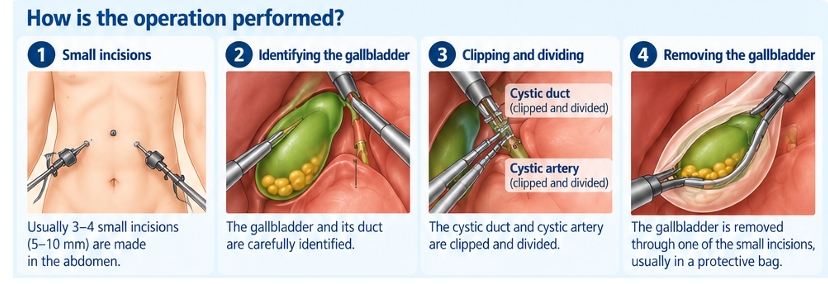
How is laparoscopic gallbladder surgery performed?
Under general anaesthesia, a camera and instruments are introduced through small abdominal incisions. The
gallbladder is exposed and the cystic duct and cystic artery are carefully identified.
Do you perform an intraoperative cholangiogram?
Yes. In my practice, I routinely perform an intraoperative cholangiogram during laparoscopic cholecystectomy. A
small catheter is placed through the cystic duct, contrast is injected and X-ray imaging is used to outline the bile
ducts. This provides an additional assessment of the biliary anatomy and can identify common bile duct stones that
were not apparent before surgery.
What happens after the cholangiogram?
Once the anatomy and cholangiogram have been assessed, the cystic duct and cystic artery are secured and
divided and the gallbladder is separated from the liver and removed. If the cholangiogram identifies a duct stone,
management is tailored to the finding and may involve operative duct clearance or ERCP.
Why is identifying the anatomy so important?
The main bile ducts lie very close to the gallbladder. Safe cholecystectomy depends on clear anatomical
identification before structures are divided. If inflammation or scarring makes this unsafe, the surgeon may use a
different dissection strategy, subtotal cholecystectomy, further imaging or an open approach.
How long will I stay in hospital?
Many uncomplicated elective patients can go home the same day or after one night. Acute inflammation, bile duct
stones, medical conditions or a more difficult operation can require a longer stay.
What should I expect during recovery?
Incisional soreness, tiredness and temporary shoulder-tip discomfort are common. Walking is encouraged early.
Food and fluids can usually be restarted soon after surgery and advanced according to comfort.
What are the important risks?
Possible complications include bleeding, wound infection, bile leak, retained bile duct stones, injury to nearby
organs and bile duct injury. Anaesthetic complications, chest problems and blood clots are also possible.
When should I contact my surgeon?
Seek medical review for increasing abdominal pain, persistent vomiting, fever, jaundice, progressive swelling,
significant wound redness or discharge, or difficulty eating and drinking.
Frequently Asked Questions
Will I need a drain?
Not routinely after an uncomplicated operation. A drain is used selectively when there is a specific reason.
Why do you perform the cholangiogram?
In my practice it is a routine additional check of the biliary anatomy during surgery and may also detect common
bile duct stones.
Can the operation become open surgery?
Yes. Conversion is sometimes the safest option when anatomy is difficult or inflammation is severe.
Will I need a special diet forever?
Usually no. Most patients return to a normal balanced diet.
The key message
The goal is not simply to remove the gallbladder through small incisions. It is to remove it safely while
protecting the bile ducts. In my practice, routine intraoperative cholangiography forms part of that
safety-focused operative approach.
Dr. Mohammed Alassaf
Consultant Bariatric & Gastrointestinal Surgeon
Dr. Alassaf is a leading expert in minimally invasive and bariatric surgery,
with extensive experience helping patients overcome obesity and related conditions.
Having completed advanced training in Australia and the Middle East, he is known
for his compassionate approach and evidence-based surgical care.