Gastroparesis: When Is a Procedure or Surgery Needed?
Gastroparesis & Delayed Gastric Emptying
Gastroparesis: When Is a Procedure or Surgery Needed?
Dr-Alassaf
Nov 10, 2026
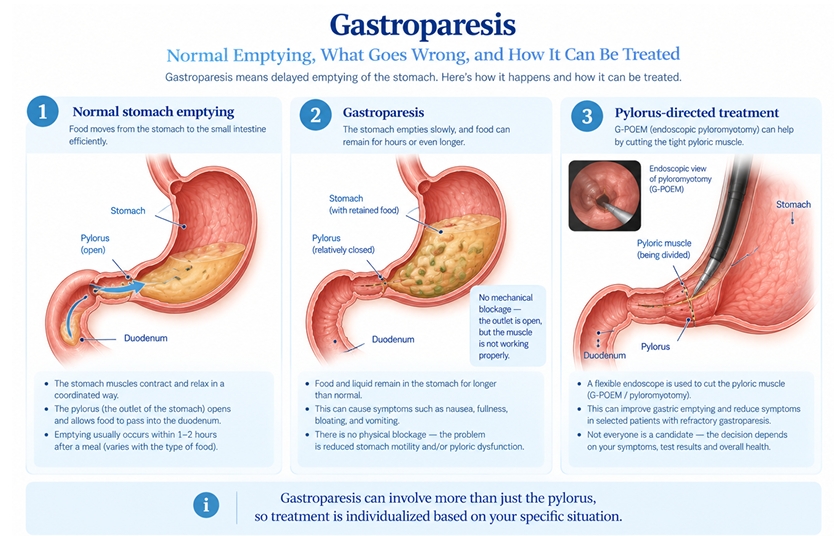
Gastroparesis is a condition in which the stomach empties food more slowly than normal without a
physical blockage. The stomach and its outlet, the pylorus, normally work together to grind food and move
it into the small intestine. In gastroparesis, this coordinated process is impaired.
Symptoms can be troublesome, but most patients do not begin with a procedure or operation. Treatment
usually starts with nutrition and dietary changes, control of contributing conditions, and medication.
Procedures are generally considered when symptoms remain significant despite appropriate medical
treatment.
What symptoms can gastroparesis cause?
Common symptoms include nausea, vomiting, feeling full soon after starting a meal, prolonged fullness after
eating, bloating and upper abdominal discomfort. Some patients have difficulty maintaining their weight or
nutrition.
The severity of symptoms does not always match the degree of delayed emptying. Similar symptoms can
also occur in other digestive disorders, so establishing the diagnosis is important before considering an
invasive treatment.
What causes gastroparesis?
Diabetes is an important cause. Gastroparesis can also occur after surgery that affects the vagus nerves or
stomach, after some infections, or without an identifiable cause, when it is called idiopathic gastroparesis.
Certain medications can slow gastric emptying and may need to be reviewed during the assessment.
How is gastroparesis diagnosed?
The diagnosis requires compatible symptoms, objective evidence that the stomach is emptying slowly, and
exclusion of a mechanical obstruction. Upper endoscopy or other investigations may therefore be needed to
make sure there is no narrowing or blockage at the stomach outlet.
A gastric emptying study using a solid meal is the standard test used to document delayed gastric
emptying. Current guidance recommends an adequately long study rather than a short gastric-emptying
test.
What treatment is tried first?
Treatment is individualized. A small-particle diet and smaller meals may be easier to tolerate. Good glucose
control is important in patients with diabetes. Medicines may be used to improve gastric emptying or control
nausea and vomiting. Hydration and nutrition are particularly important when symptoms are severe.
If adequate nutrition cannot be maintained by mouth, temporary or longer-term nutritional support may
sometimes be necessary.
Why is the pylorus important?
The pylorus is the muscular outlet between the stomach and the duodenum. In some patients with
gastroparesis, abnormal pyloric function may contribute to resistance to stomach emptying.
This has led to treatments designed to relax or divide the pyloric muscle. However, gastroparesis is not
simply a tight pylorus: abnormalities of the stomach muscles, nerves and coordination may also contribute.
This is why pylorus-directed treatment helps some patients more than others.
What is G-POEM?
G-POEM (gastric peroral endoscopic myotomy) is an endoscopic procedure performed through the
mouth without abdominal incisions. The endoscopist creates a tunnel within the stomach wall and divides
the pyloric muscle. This is intended to reduce resistance at the gastric outlet and allow the stomach to
empty more easily.
G-POEM is generally considered for selected patients with medically refractory gastroparesis.
Evidence, including sham-controlled data, shows that it can improve symptoms and gastric emptying in
appropriately selected patients, but it is not effective for everyone.
What about surgical pyloroplasty?
A surgical pyloroplasty also opens the pylorus, but it is performed through the abdominal wall, usually using
minimally invasive surgery. The pyloric muscle is divided and reconstructed to create a wider gastric outlet.
It may be considered in selected patients, particularly when another abdominal operation is being performed
or when an endoscopic approach is not appropriate.
What is gastric electrical stimulation?
Gastric electrical stimulation uses a surgically implanted device with electrodes placed in the stomach wall.
It is mainly intended to reduce difficult symptoms such as chronic nausea and vomiting rather than simply to
speed gastric emptying.
The evidence is mixed and patient selection is important. It is generally reserved for carefully selected
patients with severe, treatment-resistant symptoms rather than used as routine treatment for gastroparesis.
Is Botox injection into the pylorus useful?
Although botulinum toxin can temporarily relax the pyloric muscle, routine intrapyloric Botox injection is not
recommended based on randomized controlled trials. Research continues into whether measurements of
pyloric function may identify particular subgroups who respond differently.
Is gastrectomy ever needed?
Removing part or most of the stomach is not a routine treatment for gastroparesis. Major gastric surgery
carries significant nutritional and surgical consequences and is reserved for exceptional, highly selected
situations after other treatment options have been considered.
What happens after G-POEM or pyloroplasty?
Diet is usually advanced gradually after the procedure according to the treating team's protocol. Patients are
monitored for pain, bleeding, infection and other complications. Improvement may occur gradually rather
than immediately.
Follow-up is important because symptom improvement and gastric-emptying improvement do not always
occur to the same degree. Nutrition, weight, diabetes control when relevant, and ongoing symptoms should
continue to be assessed.
What are the possible risks?
Risks depend on the procedure. G-POEM can cause bleeding, infection, mucosal injury or perforation and
other endoscopic complications. Surgical pyloroplasty carries the usual risks of abdominal surgery as well
as leakage or other problems related to the pyloric repair. Gastric electrical stimulation requires an
implanted device and carries risks including infection, lead or device problems and the risks of surgery.
The balance between potential benefit and procedural risk is particularly important because gastroparesis is
a complex motility disorder and no procedure guarantees complete symptom relief.
What can I expect in the long term?
For some patients with severe refractory gastroparesis, a pylorus-directed procedure can substantially
improve nausea, vomiting, meal tolerance and quality of life. Other patients experience partial improvement,
and some do not respond.
Even after a successful procedure, attention to meal size, nutrition, diabetes control when relevant, and
medications may still be necessary. The goal is usually meaningful improvement in symptoms and nutrition
rather than restoring the stomach to completely normal function.
Dr. Mohammed Alassaf
Consultant Bariatric & Gastrointestinal Surgeon
Dr. Alassaf is a leading expert in minimally invasive and bariatric surgery,
with extensive experience helping patients overcome obesity and related conditions.
Having completed advanced training in Australia and the Middle East, he is known
for his compassionate approach and evidence-based surgical care.