After Skin Surgery: Wound Care, Stitches, Scars and Warning Signs .
Postoperative Wound Care, Skin Surgery Recovery & Scar Management.
After Skin Surgery: Wound Care, Stitches, Scars and Warning Signs .
Dr-Alassaf
Nov 07, 2026
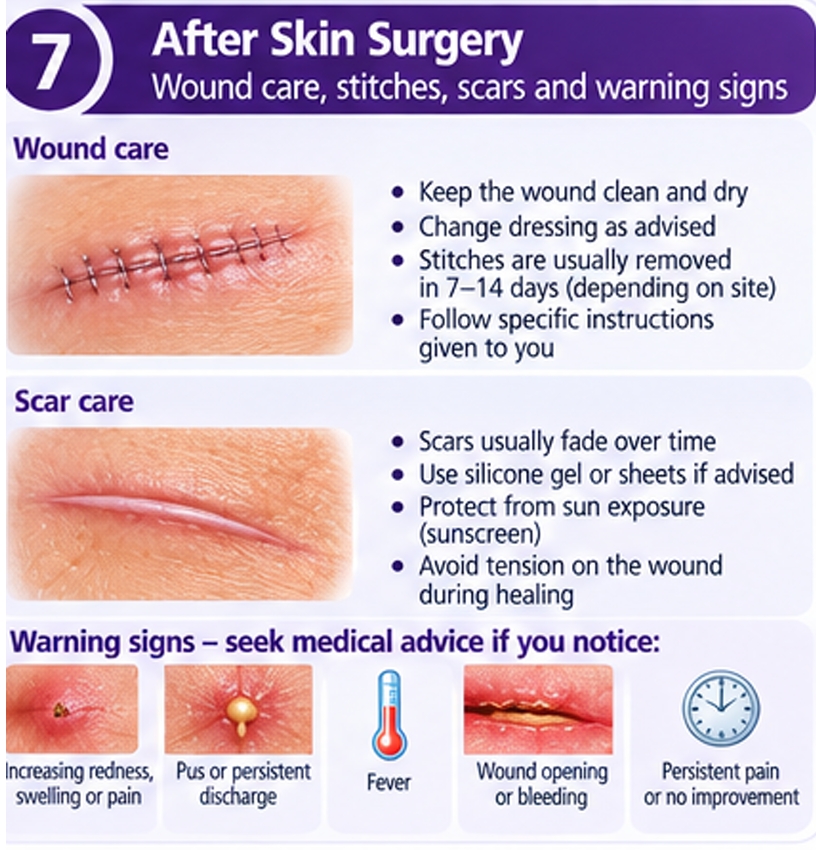
Good wound care supports healing after removal of a cyst, lipoma, mole or skin cancer. Instructions vary with the site, type of closure, flap or graft, so the advice from your own surgical team takes priority. Most wounds heal uneventfully with simple care.
How should I care for the wound?
Keep the dressing and wound according to the instructions provided. Many closed wounds can get gently wet after the initial period, but soaking and friction should be avoided until healing is established.
When are stitches removed?
Timing depends strongly on the body site and wound tension. Facial sutures are generally removed earlier than those on the trunk or limbs. Some stitches are absorbable and do not require removal.
What is normal in the first few days?
Mild soreness, bruising, swelling and a small amount of blood staining can be normal. Symptoms should gradually improve rather than progressively worsen.
What suggests infection?
Increasing redness, warmth, swelling, pain, pus or persistent discharge, fever and feeling unwell can indicate infection and should prompt review.
What if the wound opens or bleeds?
Firm continuous pressure controls many small postoperative bleeds. Persistent bleeding, significant wound separation or an expanding swelling needs medical assessment.
How can I improve the scar?
Scars mature for many months. Once the wound is fully healed, silicone gel or sheets may help selected scars. Sun protection reduces prolonged pigmentation and colour change.
Can I exercise?
Movement is usually encouraged, but stretching or loading the wound too early can increase tension and widen the scar. Activity restrictions depend on site, size and closure.
What are hypertrophic and keloid scars?
A hypertrophic scar becomes raised but remains within the original wound boundaries. A keloid extends beyond them. People with a previous tendency to keloids should tell their surgeon before elective skin surgery.
When will the scar look final?
Early scars are often pink, firm and more visible. They usually soften and fade over months; final maturation can take a year or longer.
Does every wound need antibiotics?
No. Clean skin surgery usually does not require routine postoperative antibiotics. They are used selectively according to contamination, infection risk and clinical findings.
Frequently Asked Questions
Can I put creams on a fresh wound?
Use only products recommended for the specific wound until the skin has sealed.
Is itching normal?
Mild itching is common during healing. Severe itch with rash, increasing redness or discharge should be assessed.
When should I seek urgent help?
Persistent heavy bleeding, rapidly increasing swelling, wound breakdown with significant symptoms, fever or spreading infection requires prompt medical review.
The key message
Most skin-surgery wounds need simple care: protect the closure, follow site-specific stitch instructions, reduce tension and watch for progressive redness, discharge, bleeding or wound separation. Scar appearance continues to improve for many months.
This article is for general patient education and does not replace individual examination, pathology review or advice from your treating surgeon or dermatologist.
Dr. Mohammed Alassaf
Consultant Bariatric & Gastrointestinal Surgeon
Dr. Alassaf is a leading expert in minimally invasive and bariatric surgery,
with extensive experience helping patients overcome obesity and related conditions.
Having completed advanced training in Australia and the Middle East, he is known
for his compassionate approach and evidence-based surgical care.