Abscesses and Infected Skin Cysts: Incision, Drainage and Definitive Treatment
Dr-Alassaf
Nov 07, 2026
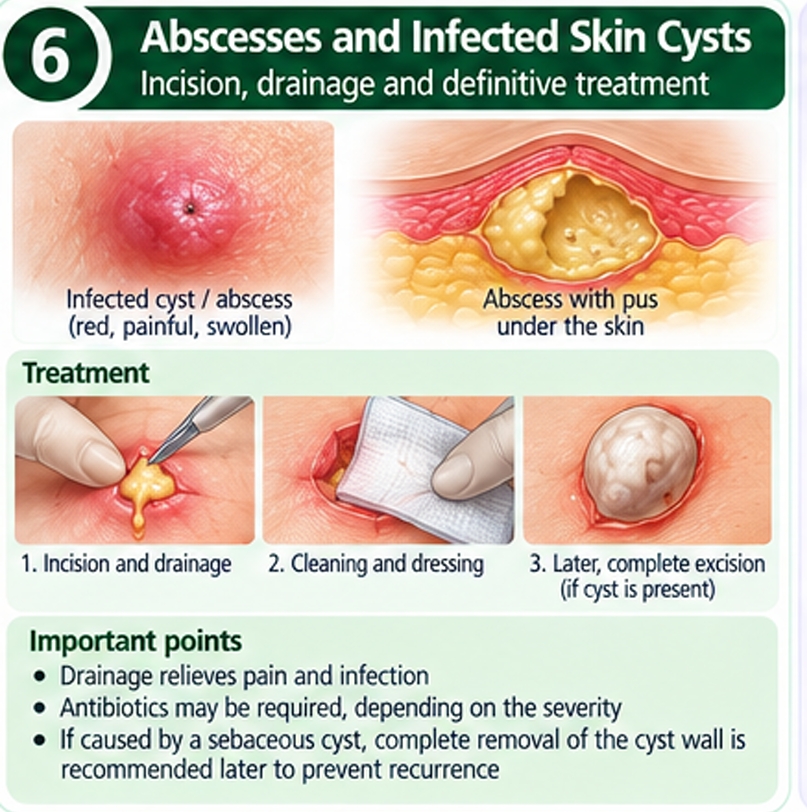
A skin abscess is a collection of pus beneath the skin. Once a true abscess has formed, antibiotics alone often cannot penetrate the cavity adequately. The central treatment is usually drainage, while antibiotics are added according to the severity of infection and the patient's clinical risk.
How does an abscess present?
Typical features are a painful, red, warm, swollen lump that may become soft or fluctuant in the centre. Fever, spreading redness or systemic illness suggests more significant infection.
Why is drainage so important?
Pus trapped in a closed cavity has poor blood supply. Opening the abscess releases pressure, removes infected material and allows the cavity to heal from inside out.
What happens during incision and drainage?
The area is anaesthetised when feasible, an incision is made over the collection, pus is drained and loculations are broken down. The cavity is irrigated or cleaned as appropriate and a dressing is applied.
Does every abscess need antibiotics?
No. Antibiotics are used when there is significant surrounding cellulitis, systemic illness, immunosuppression, particular anatomical concerns, recurrent disease or other clinical indications.
Should the wound be stitched closed?
Usually an abscess cavity is left open initially so infection can continue to drain. Dressings and wound review are used while it heals.
What if the abscess came from an epidermoid cyst?
Drainage treats the acute infection but often leaves the cyst wall behind. Once inflammation settles, elective complete cyst excision can be offered to reduce recurrence.
What warning signs require reassessment?
Increasing redness, fever, worsening pain, persistent pus, spreading swelling, systemic illness or failure to improve should prompt medical review.
Can abscesses recur?
Yes. Recurrence can occur when an underlying cyst remains, when there is hidradenitis or another skin condition, or when infection risk factors persist.
Frequently Asked Questions
Can I squeeze an abscess myself?
This is not recommended. Incomplete drainage and trauma can worsen inflammation or spread infection.
Will drainage leave a scar?
Usually yes, although incision placement and later healing influence its appearance.
How quickly should pain improve?
Pressure-related pain often improves substantially after adequate drainage, although tenderness can persist during healing.
The key message
A true abscess usually needs drainage rather than antibiotics alone. If an infected epidermoid cyst is the cause, drainage controls the acute problem and complete cyst-wall excision can be considered later.
This article is for general patient education and does not replace individual examination, pathology review or advice from your treating surgeon or dermatologist.
Dr. Mohammed Alassaf
Consultant Bariatric & Gastrointestinal Surgeon
Dr. Alassaf is a leading expert in minimally invasive and bariatric surgery,
with extensive experience helping patients overcome obesity and related conditions.
Having completed advanced training in Australia and the Middle East, he is known
for his compassionate approach and evidence-based surgical care.